
Before You Add Street Karting to Your Tokyo Itinerary: How to Plan Around It When Your Group Varies in Age and Energy
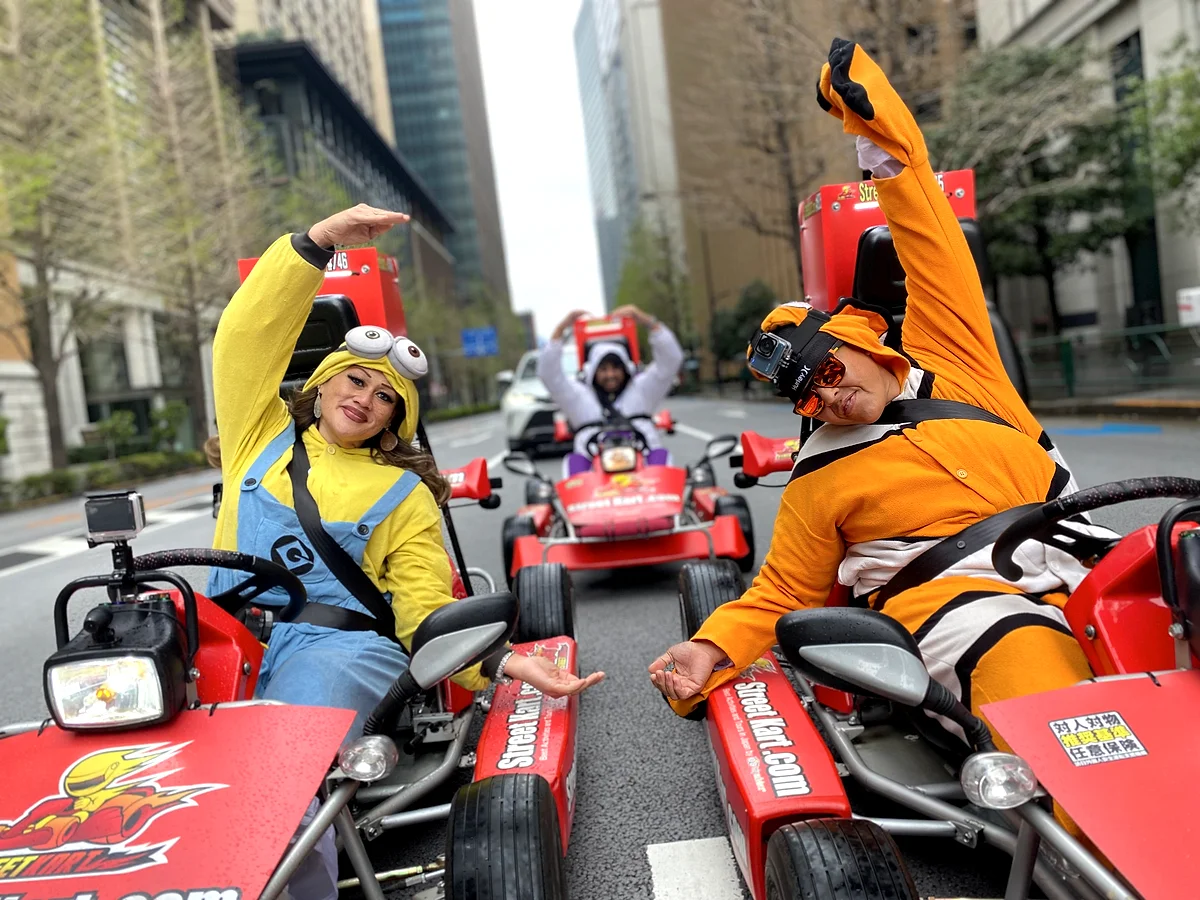
Before You Add Street Karting to Your Tokyo Itinerary: How to Plan Around It When Your Group Varies in Age and Energy
Parents in their sixties. A sibling who just got their license. And one person who can walk all day without breaking a sweat.
Put a group like that together, and planning a trip to Tokyo suddenly gets tricky.
You want to fit street karting into the schedule. But can everyone enjoy it at the same pace?
What matters most isn't the time spent in the kart. It's how you plan what comes before and after. Tokyo's stations are big and crowded, and your reservation has a fixed start time. If you know where people tend to get stuck, the day itself goes much more smoothly. Let's go through some common assumptions and how to avoid them, one at a time.
Are You Assuming Everyone Can Ride?
The first problem shows up right at the start of planning.
"We came all this way, so let's all ride together!"
I get it. But karts are single-seaters. Everyone drives their own. Nobody can sit next to someone else as a passenger.
Also, since you'll be driving on public roads, there are requirements like a driver's license and a minimum age. I won't spell out the exact rules here, because what you need to check depends on the type of license you hold and the country that issued it, and the rules can change. Before you book, open the driver's license information page and check for each person in your group. Showing up on the day thinking "it'll probably be fine" is the riskiest thing you can do. If someone finds out at the front desk that they can't ride, half of their day suddenly has nothing in it.
It also helps to know how the tours work. Street Kart runs guided tours with a guide in front. Each location has set routes, and everyone drives behind the guide. If someone wants to watch first and maybe join partway through, check the official website to see whether that's possible.
All of this leads to one point: plan on the assumption that some people won't ride.
For a group with a wide range of ages and energy levels, this is where you start. Having some people sit it out doesn't mean anything went wrong. If you give them somewhere they'll enjoy spending that time, the day works out well for everyone.
Pack Too Much Around It, and Someone Runs Out of Energy First
Tokyo's attractions are packed close together, so it's easy to keep adding more. From Akihabara, Ueno Park is just five minutes by train. The zoo in the morning, merch hunting in Akiba around midday, then karting, then dinner in Ginza... On a map, it looks perfect.
But the map doesn't show how much energy your group has.
While the younger ones are still going strong, the older members are already dragging their feet. It happens all the time. The same goes for the people riding. If they reach the meeting point after a long day of walking, they'll start their kart ride already a bit tired.
What I recommend is to put just one light activity before karting. At the Shinagawa location, Shinagawa Shrine is a five-minute walk from the shop. It's one of the Ten Shrines of Tokyo and has a Fujizuka, a miniature Mount Fuji. However, you reach the torii gate at the entrance by a flight of stone steps. If anyone has knee problems, only the energetic ones need to climb to the top, and everyone else can wait at the bottom. A relaxed plan like that works well.
Then, have somewhere to sit ready for after karting. People often forget this part. Right after the ride, the drivers are buzzing, with tons to talk about. Meanwhile, the people who waited are ready to sit down. If you can go into a café at this point, both groups come back together easily. In Akihabara, Starbucks Akihabara Ekimae is a two-minute walk from the shop. Near the Shinagawa location, Starbucks Shinagawa Grand Commons is a five-minute walk away.
Also, don't schedule anything with a fixed start time right after the tour. Tour length depends on the location and the plan, so check the official website. Then leave plenty of open time afterward. At music events, a timetable that cuts changeover time short almost always runs late somewhere. Travel plans work the same way.
Choose Your Location Based on Where Non-Riders Can Spend Their Time
If you haven't picked a location yet, this makes the biggest difference.
Street Kart has nine locations nationwide, seven of them in Tokyo. However, Akihabara's first and second shops are almost in the same spot, and so are Shibuya and Shibuya Annex. So don't picture seven separate areas of Tokyo to choose from. In practice, you're choosing by the feel of an area: Shinagawa, Akihabara, Shibuya, or Tokyo Bay (Shin-Kiba).
The kart route isn't the only thing to consider. Look at where the non-riders can go and how they'll spend that time. That can change your answer.
Akihabara has the Electric Town right around the shop. Yodobashi Camera Akihabara is a three-minute walk, and so is Radio Kaikan. If someone in your group loves electronics or cameras, the wait will fly by. For those who can walk a bit farther, Kanda Myojin is a ten-minute walk. It's known as the guardian shrine of old Edo, and stepping in from the busy Electric Town, you can feel the atmosphere change right away.
Shinagawa suits people who want to take it easy. Besides Shinagawa Shrine five minutes away, Honsenji Temple is a ten-minute walk and has a large temple bell designated a Tangible Cultural Property of Tokyo. The nearest station is Kita-Shinagawa on the Keikyu Main Line, three minutes on foot. That's very convenient for groups with members who'd rather walk less. Tennozu Isle is a twenty-minute walk, which makes it a good post-tour stroll for anyone with energy left.
Shibuya has lots to see, but each spot takes a bit of walking. Shibuya Scramble Crossing, the Hachiko statue, Shibuya Hikarie, and Shibuya Scramble Square are all about a ten-minute walk from the shop. Meiji Jingu and Yoyogi Park are twenty minutes away. You really should soak up the energy of Scramble Crossing at least once! Still, some people find the crowds exhausting. For those waiting, keep an indoor option like Hikarie in mind. The nearest station is Shinsen on the Keio Inokashira Line, five minutes on foot.
Tokyo Bay (Shin-Kiba) is appealing because you drive through open waterfront scenery. However, the sightseeing spots around the shop are mostly a bit farther away, like Odaiba. It's an eight-minute walk from Shin-Kiba Station to the shop. The station has a café and restaurant called CASICA, which could work as a place for non-riders to wait.
Whichever location you choose, there's a convenience store within five minutes on foot, and the shop has restrooms inside. Telling older members about this in advance saves a lot of back-and-forth.
Driving There or Arriving Just in Time: Timing Problems
"Wouldn't it be easier to put everyone in one car?"
This idea comes up a lot on group trips. But in Tokyo, I don't recommend it. The shops have no parking, and traffic in central Tokyo can be heavy. Take the train or other public transportation.
On the train, watch out for how huge the transfer stations are. At Shinjuku and Shibuya, platforms that look close together on a map can still mean quite a walk. For a group with mixed energy levels, don't aim for the time you arrive at the nearest station. Aim for the time you've arrived and had a chance to catch your breath. For Shinagawa, that's Kita-Shinagawa Station. For Akihabara, it's Suehirocho Station (three minutes on foot). For Shibuya, it's Shinsen Station, and for Tokyo Bay, it's Shin-Kiba Station. Look up the station closest to the shop first, then choose a route with as few transfers as possible. That alone saves a lot of wear on everyone's feet.
For a tour with a fixed reservation time, arriving a little early is ideal, once you allow for walking inside the station. If you get there early, everyone can just take a break with a drink from the convenience store.
Booking and Language Problems Can Be Headed Off Too
If you wait until your plans are almost final to book, this is where you'll run into trouble. Weekend slots fill up quickly. If your trip includes a weekend, book early, as soon as you've picked a location. If your schedule is flexible, putting karting on a weekday is another good option.
Reservations are accepted via Facebook, LINE, and email. Contact details are on the official website. Prices vary by season and time of day, so check the official website (kart.st) for current rates.
Think about language too. Guidance on the day of the tour is basically in English. Guidance in Japanese or other languages depends on the staff that day and isn't guaranteed. If someone in your group isn't comfortable with English, it's a good idea to send any questions through the official website beforehand.
The official website is available in 22 languages. That's separate from the language used during the tour itself, so don't mix the two up. What I'd do is post the official website link in the group chat before the trip so everyone can read about the requirements and how the tour works on their own. Even in a group where Portuguese, English, and Japanese are all flying around, if everyone has the same information, I'd like to think smiles and gestures can handle the rest!
What Street Kart Offers Each Member of Your Group
So far, we've focused on where things can go wrong. To finish, let's go over why it's still worth adding to your plans, from the point of view of both the people riding and the people waving them off.
First, a guide leads the way. Street Kart tours have a guide trained to work with foreign drivers driving in front. If someone in your group is a bit nervous because they haven't driven in a while, read through how the tour works on the official website beforehand so they know what kind of guidance to expect.
Second, the routes are set. Not being able to go wherever you want is actually a plus, if you look at it another way. You don't have to worry about where to turn or which road to take. For me, that means I can put all my attention on the scenery and the driving.
And then there's the feel of the ride itself. It's different from looking through a car window: the sounds of the city, and that moment when the light changes and everything around you starts moving at once. Music lovers might feel like the whole city is playing to a single beat.
Each location's routes have their own character, too. The Tokyo Bay tour crosses the Rainbow Bridge. The Shibuya location runs around Omotesando and Harajuku's Takeshita Street area. The Akihabara locations have routes that pass Tokyo Station's red-brick building and the streets of Ginza. Choosing a location based on which side of Tokyo you want to see works too.
The company's track record can also help you decide. As of November 2023, across all locations, they had run more than 150,000 tours, served more than 1.34 million customers, and received more than 20,000 reviews, with an average rating of 4.9 out of 5. These aren't current figures, but they're something to go on before you book for the first time.
Locations aren't limited to Tokyo, either. There are also shops in Osaka and Okinawa. If Tokyo doesn't fit your schedule, try looking in a city you'll visit later in the trip.
One Thing to Check Before You Write It Into Your Schedule
You're traveling with people of all different ages and energy levels. Not everyone has to enjoy the same thing at the same pace.
The riders drive through the city. The ones waiting relax somewhere they like. Afterward, everyone sits at the same table and shares the Tokyo they each saw. With the right planning, you can have a day like that.
The first step is to check each person's eligibility before you write "karting" into your schedule. Once you know who can ride and who won't, choosing a location and planning the time before and after will fall into place.
After checking eligibility, move on to dates. If you want to ride on a weekend, act early. Check the requirements and how to book on the official website, and bring everyone's Tokyo together into one itinerary.
Now, go open that schedule.
This article was originally written in Japanese and translated using AI. Some expressions may read unnaturally, and we appreciate your understanding. For the most accurate and up-to-date information, please refer to the official site at kart.st.
Street Kart is not affiliated with Nintendo or the Mario Kart series in any way. We do not provide costumes of Nintendo characters, and such costumes may not be worn during tours even if brought by participants.